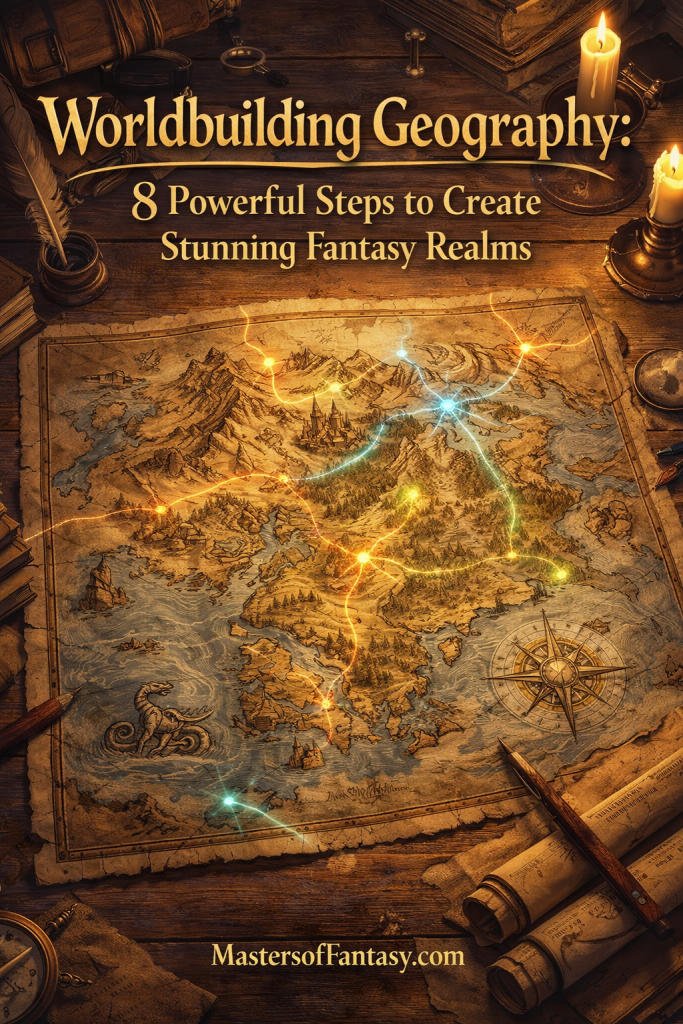

Worldbuilding geography is the foundation upon which every memorable fantasy world is constructed. Before you name your kingdoms or draft your magic systems, you need mountains, rivers, coastlines, and deserts that feel authentically alive. Geography shapes trade routes, determines where civilizations rise and fall, and influences the cultures your characters inhabit. Without a believable physical landscape, even the most imaginative storylines can feel hollow. This guide walks you through eight essential steps that will transform your approach to worldbuilding geography and help you craft fantasy settings that readers never want to leave.
Step 1: Start With Tectonic Forces and Landmasses
Every great fantasy map begins beneath the surface. Tectonic plates drive the creation of mountain ranges, volcanic islands, and deep ocean trenches. You do not need a geology degree, but understanding the basics gives your world instant credibility. Decide where your continental plates collide and where they pull apart. Collision zones produce towering mountain chains that might separate rival empires, while rift zones create dramatic valleys and volcanic regions that serve as dangerous borderlands. By grounding your worldbuilding geography in these fundamental forces, you ensure that your terrain feels internally consistent rather than randomly scattered across a page.
Step 2: Carve Rivers and Watersheds That Make Sense
Rivers are among the most commonly misdrawn features in fantasy cartography. Water flows downhill from high elevations toward the sea, and rivers merge together rather than splitting apart. A single mountain range can feed dozens of tributaries that converge into one mighty river emptying into an ocean or inland sea.
When you trace your rivers logically, you simultaneously establish where farmland will thrive, where cities will grow, and where natural borders will form. Placing a capital city at the confluence of two major rivers instantly communicates wealth and strategic importance. Skilled worldbuilding geography always treats hydrology as a storytelling tool rather than an afterthought.
Step 3: Design Climate Zones Using Latitude and Elevation
Climate breathes life into your worldbuilding geography by dictating what grows, what people wear, and how societies organize themselves. On Earth, equatorial regions are hot and humid, while polar regions are frozen and barren. Your fantasy world can follow similar principles or diverge deliberately, but it should remain internally logical.
Elevation also plays a critical role because a mountain peak near the equator can still be capped with snow. Consider rain shadows as well, where moisture-laden winds hit a mountain range, dump rain on one side, and leave the opposite side dry. These patterns create natural diversity, giving you lush jungles beside scorching wastelands without any magical explanation.
Step 4: Place Biomes to Reflect Geography and Climate Together
Once your climate zones are established, layer biomes on top of them. Tropical rainforests flourish near warm coastlines with heavy rainfall. Temperate forests blanket mid-latitude regions with moderate precipitation. Grasslands stretch across continental interiors, deserts form in rain shadows, and tundra dominates the coldest latitudes. Each biome carries its own aesthetic, dangers, and storytelling potential.
A character journeying from a dense tropical forest into an arid highland plateau experiences a dramatic shift that mirrors internal transformation. Thoughtful worldbuilding geography uses biomes not just as scenery but as narrative instruments that shape pacing, mood, and conflict throughout your story.
Step 5: Establish Coastlines, Islands, and Ocean Currents
Coastlines define the edges of civilizations and the beginnings of mystery. Jagged, fjord-carved coasts suggest a history of glaciation and often produce seafaring cultures. Smooth, sandy coastlines imply gentler geological histories and may foster merchant ports. Islands function as isolated kingdoms, pirate havens, or sacred pilgrimage sites depending on their size and distance from the mainland.
Ocean currents matter more than many fantasy writers realize. Warm currents moderate coastal climates and enable port cities to thrive at high latitudes. Cold currents can make equatorial coastlines foggy and eerie. Integrating these oceanographic details into your worldbuilding geography adds layers of realism that readers feel instinctively.
Step 6: Use Worldbuilding Geography to Drive Political Boundaries
Mountains, rivers, deserts, and seas are natural barriers that historically define where one nation ends and another begins. A towering mountain range makes a logical border because armies struggle to cross it, trade must funnel through specific passes, and cultures on either side develop independently. Rivers serve as both borders and lifelines, often becoming contested territories precisely because both sides depend on them.
Deserts and dense forests act as buffer zones that discourage expansion and create pockets of isolation where unique cultures evolve undisturbed. When your political map follows your physical geography, your world feels inevitable rather than contrived. Readers instinctively understand why two kingdoms have warred over a fertile river valley for generations.
Step 7: Layer Resources and Economy Onto the Landscape
Worldbuilding geography directly determines economic systems because resources are never distributed evenly. Mountains yield metals, gemstones, and stone. Forests provide timber and medicinal herbs. Coastal regions deliver fish, salt, and access to maritime trade. Fertile river valleys produce grain surpluses that feed armies and fund empires. Arid regions might guard rare spices or magical reagents found nowhere else.
When you decide where each resource exists, you automatically generate trade routes, economic rivalries, and power imbalances that fuel compelling stories. A landlocked kingdom rich in iron but starving for grain has a built-in reason to negotiate or invade its agricultural neighbors. These conflicts emerge organically from the geography itself, requiring no artificial plot contrivance to justify their existence.
Step 8: Integrate Magical and Supernatural Elements
Fantasy worlds have one tremendous advantage over real-world worldbuilding geography because they can incorporate the impossible. Perhaps a floating mountain range defies gravity above a shattered plain, or an eternal storm sits over a cursed sea that no ship can cross. Maybe ley lines of magical energy follow geological fault lines, making tectonically active regions both dangerous and powerful.
The key is to treat magical geography with the same internal consistency you apply to natural features. If a forest grows in perpetual twilight because of an ancient enchantment, consider how that affects nearby settlements and trade routes. Magical elements should extend your worldbuilding geography rather than contradict it, creating wonder that still feels grounded within the rules you have established.
Bringing Your World Together
The greatest fantasy worlds feel discovered rather than invented. When your worldbuilding geography follows logical principles, whether natural or supernatural, readers trust the world and invest emotionally in the characters who inhabit it. Start with deep geological forces, build upward through climate and biomes, carve coastlines and rivers, and then let civilizations grow naturally from the landscape.
Layer in resources, politics, and magic until every element connects in a web of cause and effect. You do not need to explain every detail on the page, but knowing how your world works beneath the surface gives your writing authority and depth. Worldbuilding geography is not just the stage on which your story plays out. It is a silent character that shapes every decision, conflict, and journey your heroes undertake. Treat it with care, and your fantasy world will reward you with stories that feel limitless.
For further reading on realistic terrain design, explore the comprehensive worldbuilding geography guides at World Anvil, a platform dedicated to helping fantasy creators build detailed fictional universes.


